Zurich AI Festival: Success stories of AI in Clinical Practice are all about trust, collaboration and robust medical data
I draw on some key examples of AI use in Hospital clinical operations and Biotech presented at AI Zurich Festival 2025 by the Swiss Data Science Center (SDSC) conference event centered around the pivotal question, 'From Promise to Practice: What do clinicians need from AI?'.
INDUSTRY EVENTSHEALTHCAREARTIFICIAL INTELLIGENCEHEALTHCARE INNOVATIONHEALTH DATAAI ETHICS
Irene Petre
10/10/20255 min read
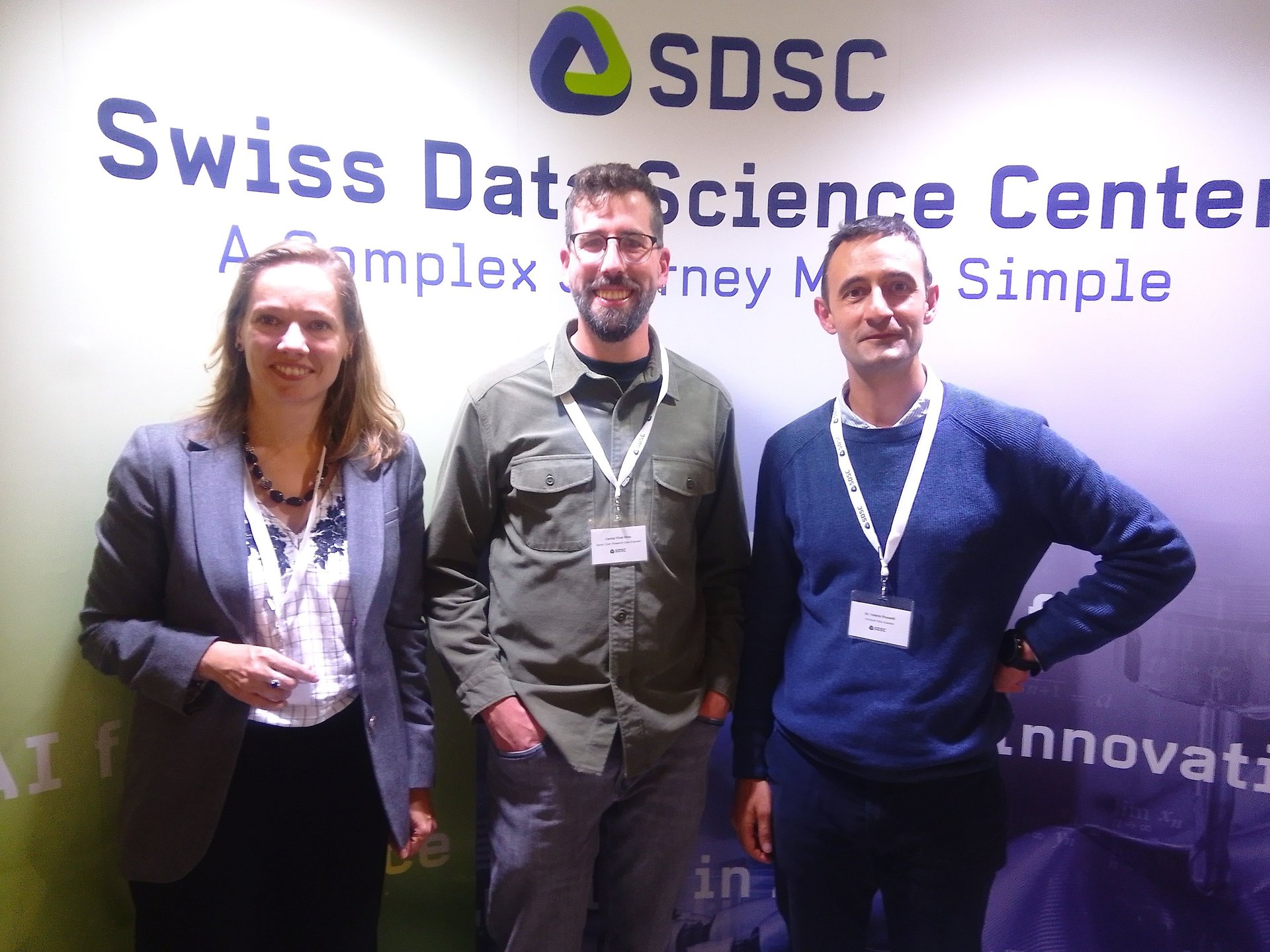
At the end of September/ beginning of October during the AI Festival in Zurich, I had the pleasure to attend a fantastic session on AI in Clinical Practice, organised by the SDSC (Swiss Data Science Center) at the University Hospital Zurich as part of Zurich AI Festival 🤖. Sessions moved from research and validation to practice and the importance of trust building.
Discussing AI uses in clinical practice is definitely a hot yet challenging topic. From the uses in stroke treatment (where AI can improve the way and depth doctors identify and see collaterals or the most relevant features of a disease and other aspects, presented brilliantly by Dr. Susanne Wegener) to AI systems for precision medicine, presented by Dr. Charlotte Bunne and to some biomarker discovery solutions for personalised medicine introduced by Sukalp Muzumdar from biotech Scailyte - we were not short of incredible success stories and promising research cases.


So challenges remain - not just because of the cost of the technology, increasingly large teams and effort required, energy usage etc. - but also because of specific medical reasons such as the difficulty of training AI models and systems on "good" and recent medical data and research (most of it is proprietary data or covered by IP), which sometimes leads to inaccurate or biased AI outputs. Therefore many AI models are disease agnostic, most data is unlabelled (this is often in order to protect privacy) and most AI systems are built to answer any general task in any field. But with precision medicine that may change in the future as benefits may surpass risks for some patients with debilitating conditions. Additionally, let's also remember that IT integration of AI with typically old legacy systems in Healthcare settings is really hard to achieve.
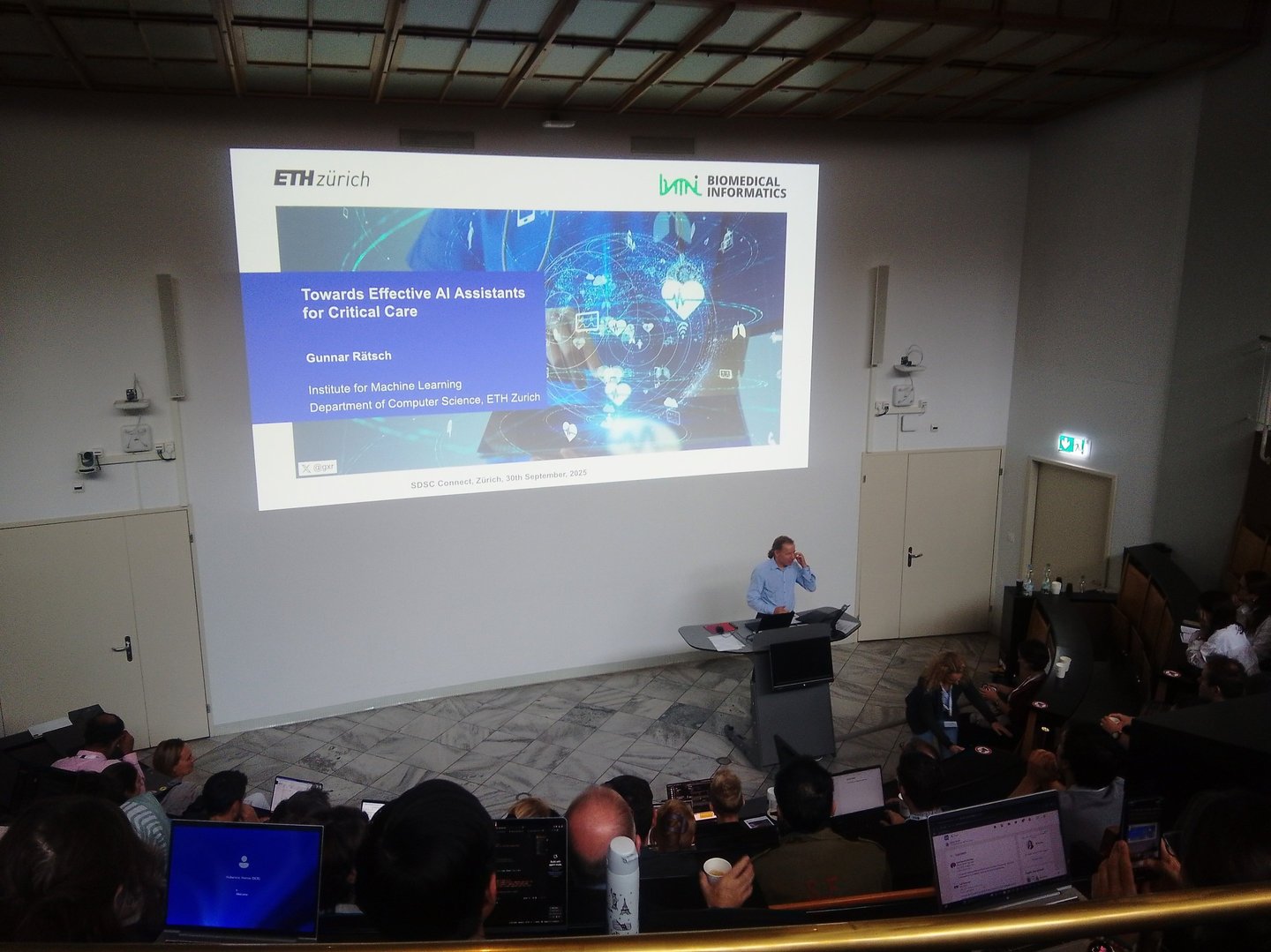
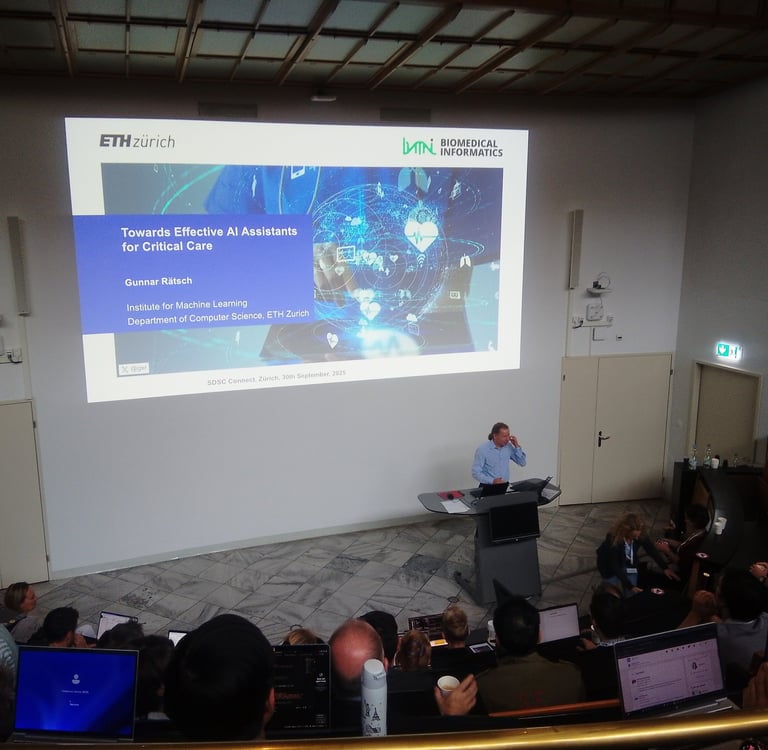
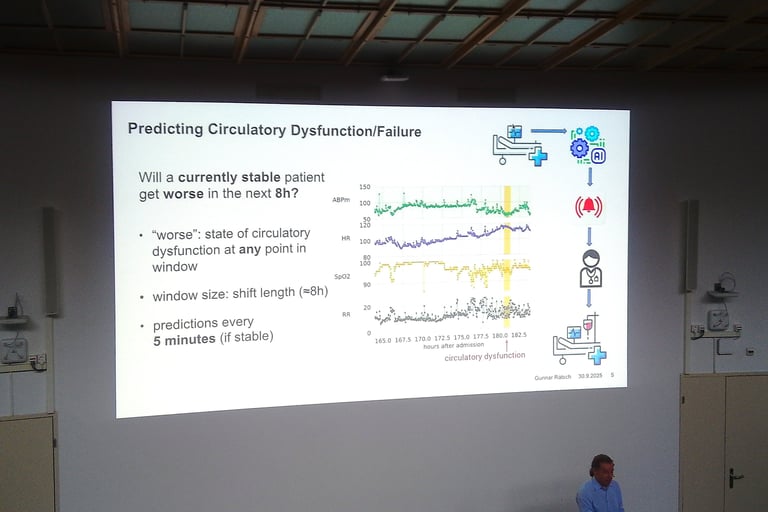
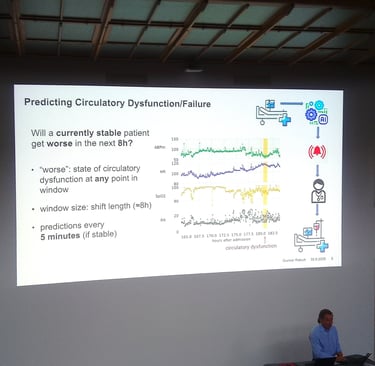
Presentations tackled both diagnostic and treatment solutions with case studies focussed on aspects such as the treatment of acute ischemic stroke or modern cancer diagnostics (which have evolved into a complex mix of complementary technologies, from well known histopathology to advanced molecular and gene profiling). Also there was evidence for another fast growing area of AI applicability which is in operational productivity improvements in hospital processes - a great example was predicting circulatory disfunction/failure and implementing early warning systems for intensive care patients using agentic AI, presented by Prof. Gunnar Rätsch. The solution presented detected circulatory failures many hours in advance, which results in up to 90x fewer ICU alarms being triggered, fewer serious incidents occurring and less staff burnout.
But why use AI in treatments? Aren't they good enough?
Well, a common problem is that some treatments are complex and risky for some patients and can have damaging side effects - AI can help identify or more accurately identify some of these risks in advance and very quickly, compared to humans. There are many contraindications and risks for IVT and MT (stroke treatments) since stroke treatments are challenging but AI can improve imaging modalities for patients and help identify patients that could benefit the most. Algorithms can help identify new variables in treatment decision making and can test the performance of these variables in prediction models. It can help predict the risk of complications for different patients and not only, across various therapeutic areas, from cardiology to neurology as Prof. Wegner explained.
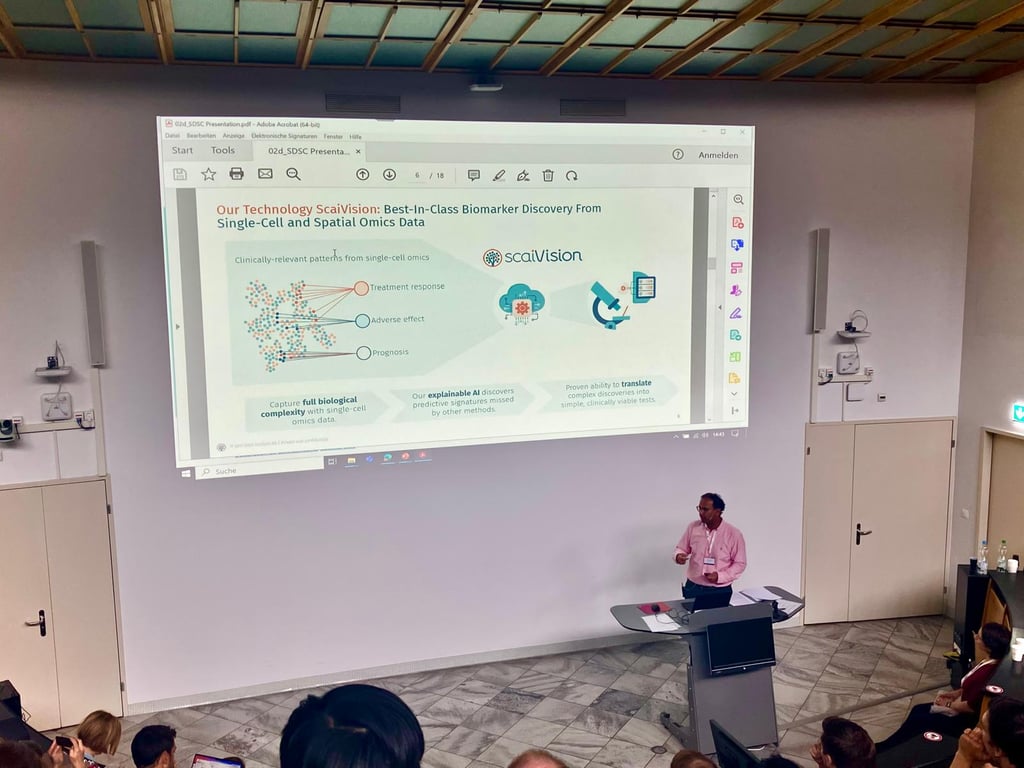
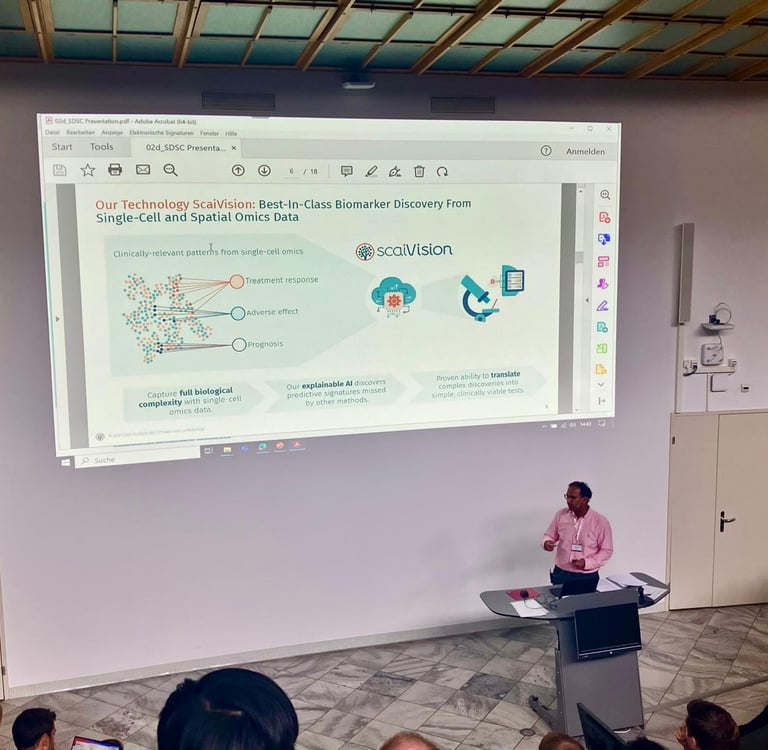
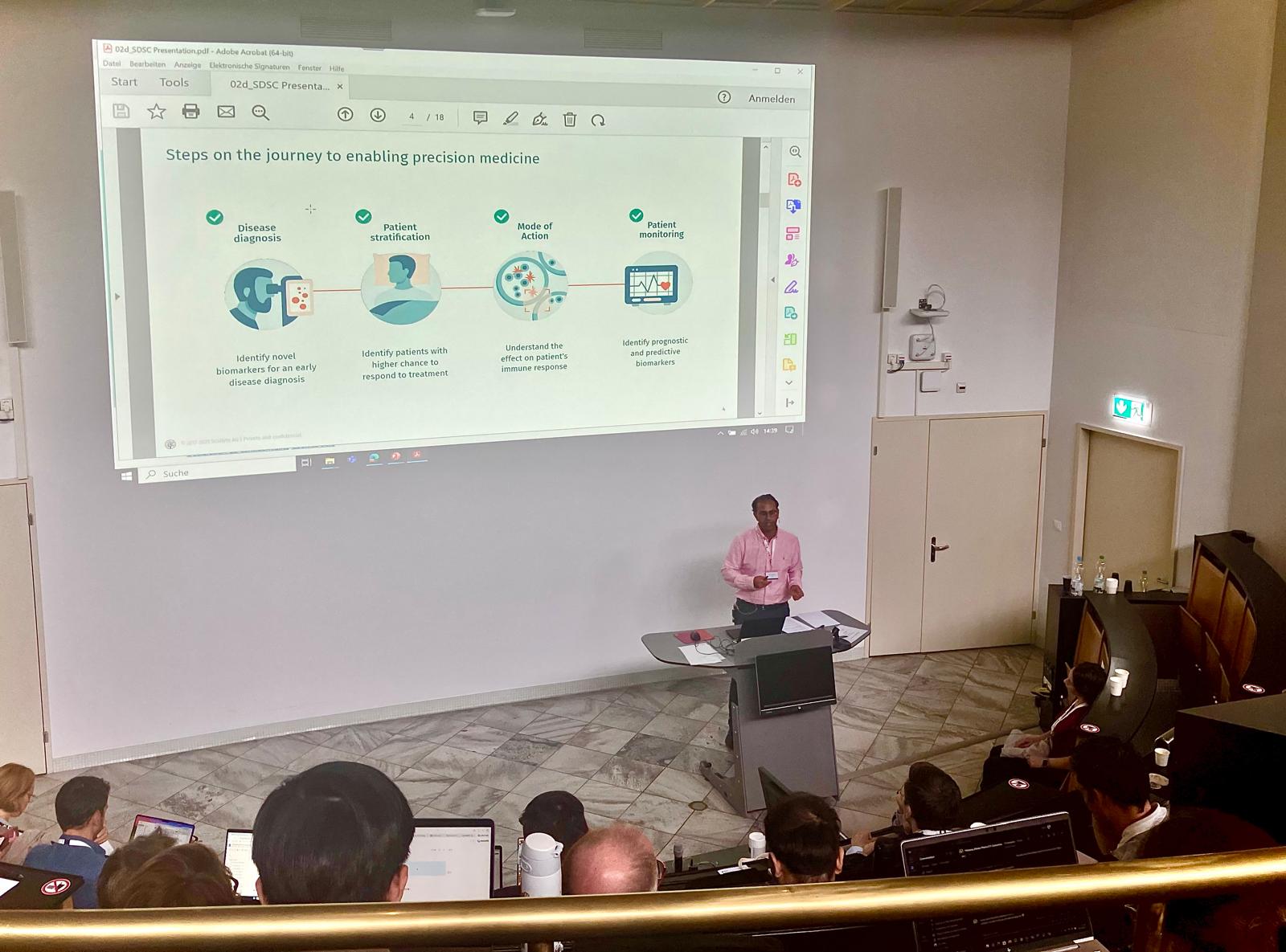
A very promising area of AI applicability is also in drug discovery - for which we had Sukalp Muzumdar, Senior Data Scientist and Head of genAi Adoption at start-up Scailyte, present their technology for biomarker discovery from single-cell and spatial omics data. The technology was already applied in the first molecular diagnostic test for endometriosis, in collaboration with Hera Biotech and is also targeting IBD (inflammatory bowel disease) patients. IBD is chronic, cannot be currently cured and, similar to endometriosis, whilst some patients only have mild symptoms, for others it is a debilitating illness. Solutions like ScaiVision AI platform are paving the way for precision medicine.
Overall, Google's voice was also present at the event - reminding us about the significant push their technology is making into life sciences and AI models: as Sam Schmidgall (a research scientist at Google DeepMind) explained, conventional static AI models have some limitations and what we really need now are sequential decision making models, which are multi-modal, based on multiple AI agents. Yet, they are also much harder to develop.
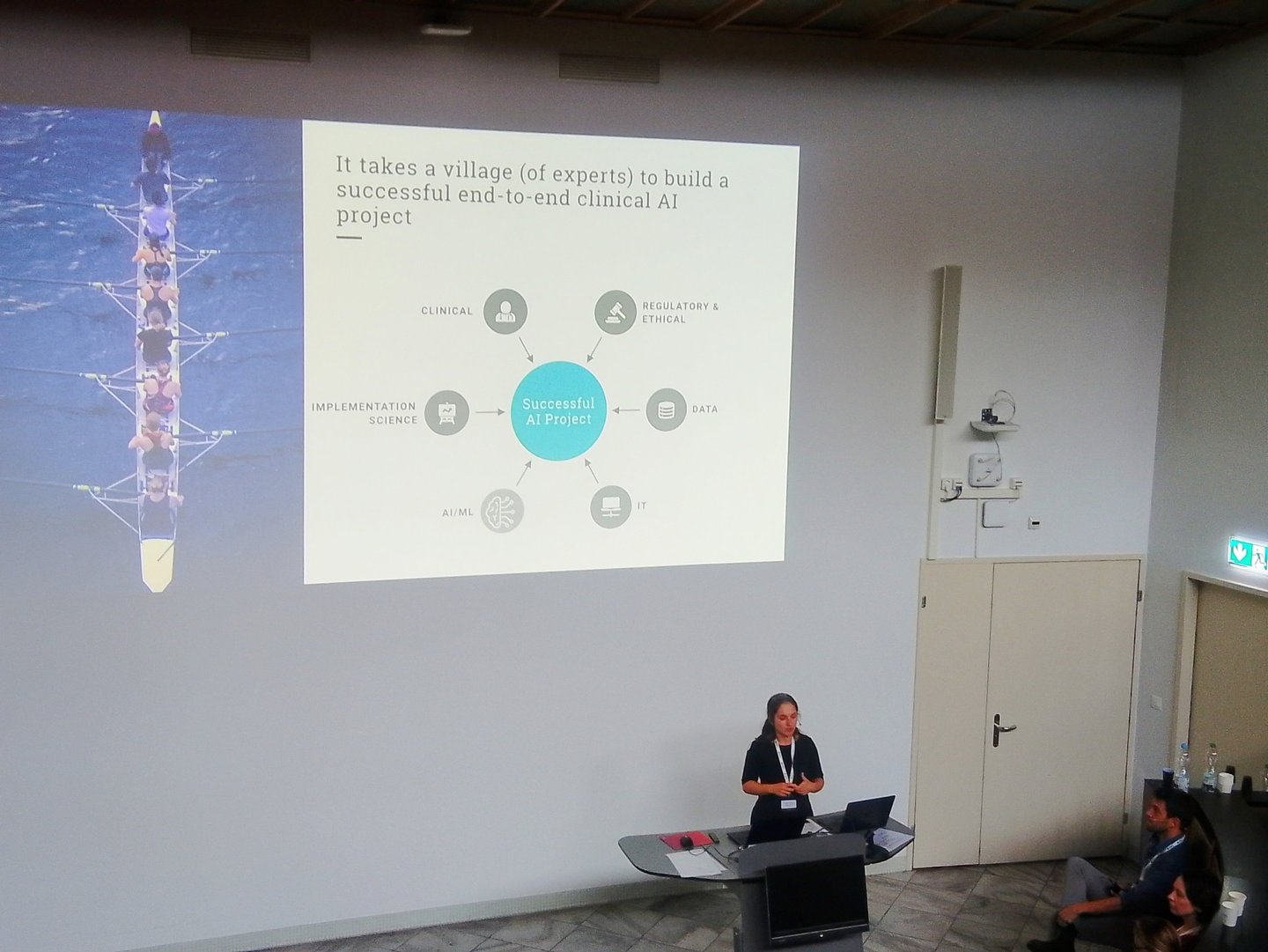
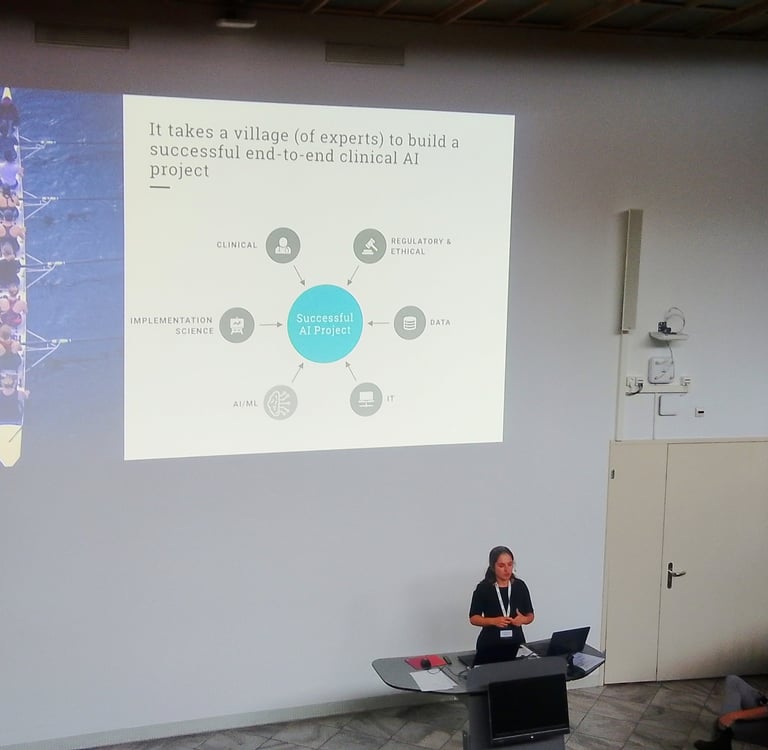
As technology and AI are becoming increasingly sophisticated and applied to already complex domains like medicine - "it takes a village of experts to build a successful end-to-end clinical AI project" to put it nicely as in the words of one of the presenters.


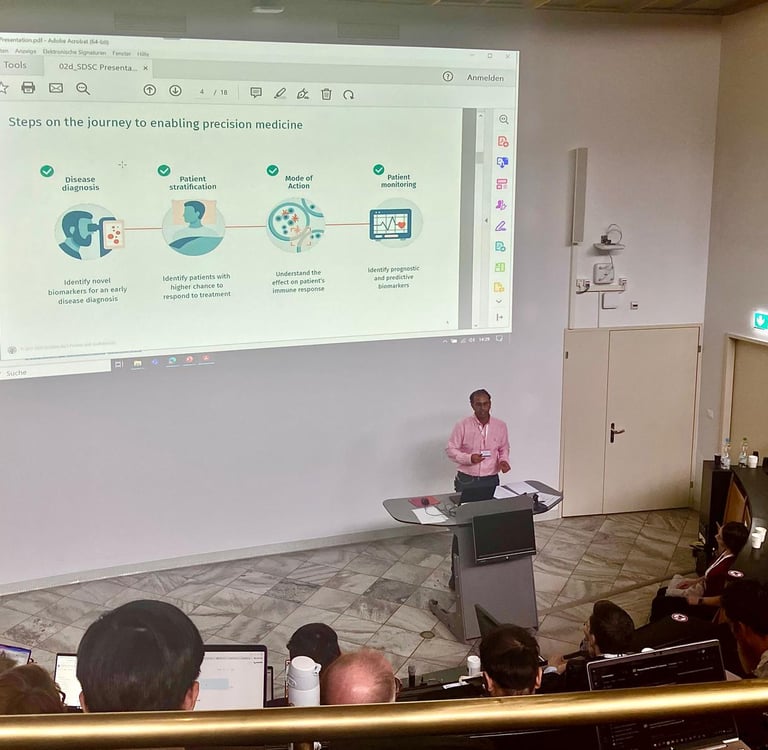


Despite success in some therapeutic areas, some medical specialties (and Radiology seems like one of the winners) and some clinical operations, building trust remains rather hard to achieve and it requires collaboration (between many players in the medical ecosystem) as well as increasingly large teams. This is also because to some extent the functioning of many AI tools remains a bit of a black box, ridden by cases of bias or random inaccuracies. Often the quality of the data, its representativeness, contextualisation, labelling and structure are key criteria to build a good AI model - but if the data is sparse and not properly structured, cleaning and restructuring it becomes a Sisyphean task.
Note: to conclude I would say that the AI field is moving at lightening speed, including in Healthcare and overall Life Sciences and whilst caution is advisable, in some areas the technology is becoming more established and potentially life changing.
Below it is an interesting chart from the Medical Futurist I found a few months ago in April, positioning different AI use cases in terms of their risk and evidence level. However in just half a year this picture has already shifted to some degree and will continue to do so.


IGEA Healthcare
Strategic Advisory for Life Sciences
Switzerland, UK, Italy
contact@igeahealthcare.com
© 2025 - 2026. All rights reserved.