The International Longevity Congress in Bucharest was all about targeted innovation to add life to years, not the other way round
Bucharest hosted its first International Longevity Congress on the 11th November, followed by a Longevity Expo and National Congress on the 12th to 13th November as Romania is looking to build on its geriatric and gerontologic research legacy of scientist Ana Aslan and her institute, the first Geriatrics Institute in the world.
POSTS
Irene Petre
11/21/20253 min read

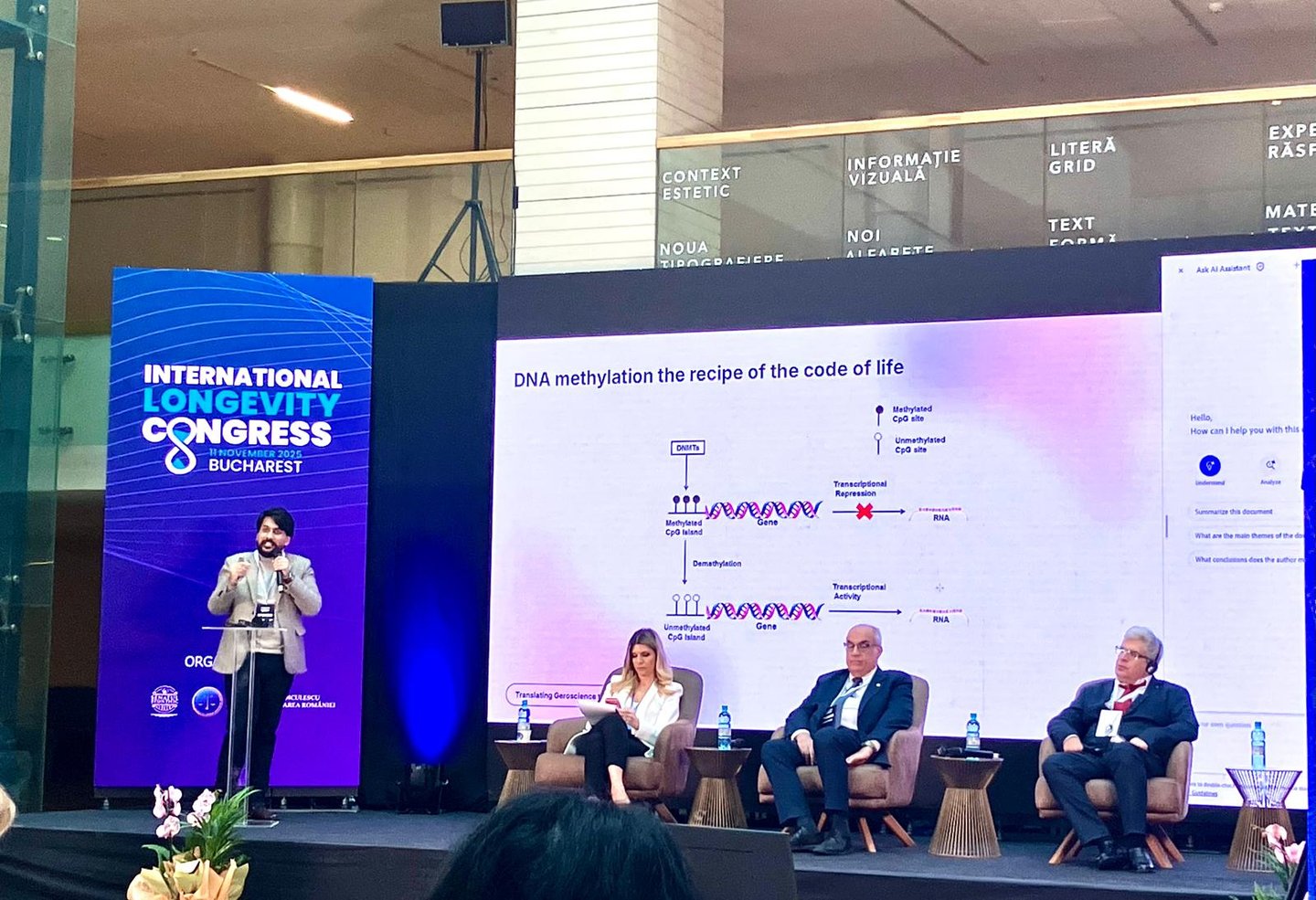
On the 11th of November the International Longevity Congress 2025 took place in Bucharest, the first such event in Romania and Fundatia Dan Voiculescu, the organisers, have high ambitions for the future – not just because the population in the country is aging fast (Romania ranked 33 globally, just behind Switzerland, in terms of percentage of elderly population 65+ y.o. in 2024 according to the UN data) but because Romania has been a pioneer in longevity research (although this is not well known or publicised) through the scientist Ana Aslan in the 70s and her National Institute for Gerontology and Geriatric Research “Ana Aslan”, the first of its kind in the world.
There were several international speakers present at the event, alongside a demo of products and devices - longevity researchers and scientists, investors and other advocates such as Raghav Sehgal, researcher in Computational Biology at Yale University and longevity tech fund investor; Sara Hagg, Prof. of Epidemiology at KarolinskaInstitutet in Sweden; Joao Pedro de Magalhaes, public speaker and Molecular Biogerontology researcher at the University of Birmingham; Aubrey de Grey, famous public speaker, Biomedical Gerontologist and advocate for Rejuvenation research; Mark Tomás Mc Auley, Lecturer in Biochemistry at Salford University and others, including young researchers and entrepreneurs such as Alexandru Voda, Molecular Biologist from Cambridge University or Anton Kulaga, Biostatistician and co-founder at Longevity Genie start-up.
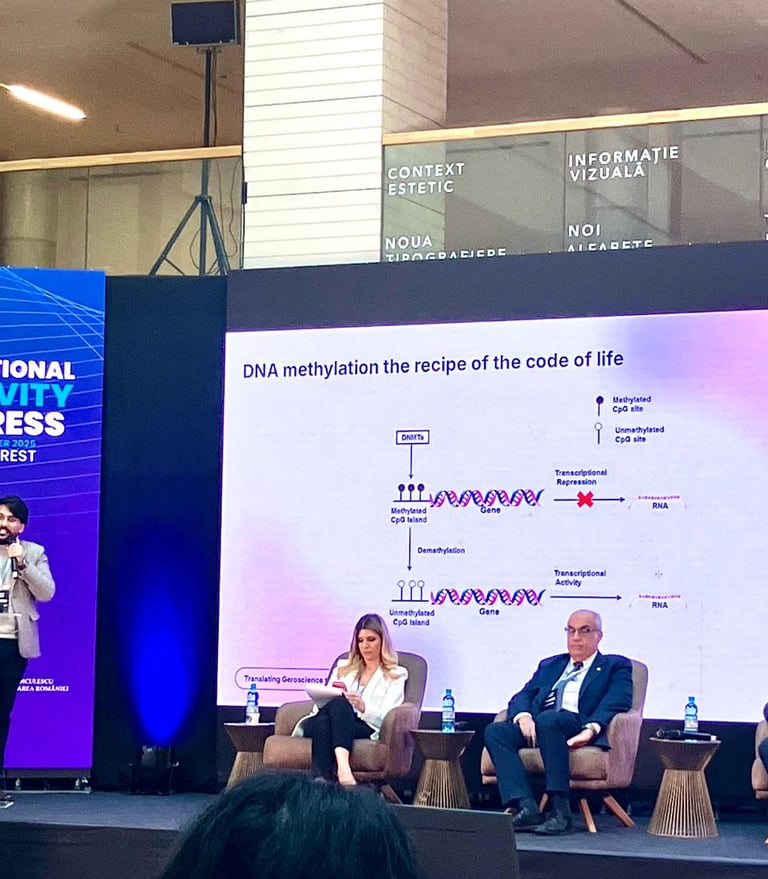
The presentations really focussed on hot topics such as longevity biomarkers, including organ specific aging biomarkers and assessment (a key growing area), programmatic aging, longevity drugs (such as the controversial Rilmenedine, NAD+ and its predecessors NMN, resveratrol, quercetin and others), the evolving landscape of AI Bio agents (a combination of no-code research platforms, agentic AI scientists, AI augmented code editors), DNA methylation clocks, DNA damage repair and stem cell therapy in aging, rejuvenation biotechnology.


Biologist and Doctor Ana Aslan and her Gerontology and Geriatrics Institute in Bucharest
The common conclusion is that age is a modifiable state and the science is moving towards reversing or at least significantly slowing aging. In fact in 50 years science and medicine have already managed to extend lifespan, prevent, cure or highly treat a significant number of diseases (such as poliomyelitis, smallpox, hepatitis C, HIV and more recently certain cancers, lymphoma, blood disorders or certain genetic blindness forms through a variety of new vaccines, cell and gene therapies, antibodies, RNA based therapeutics etc.) and slow down aging, at least in developed countries.
But aging per se is not a disease and many drugs and devices struggle to obtain FDA or EMA approval – they end up either as medical devices and drugs with other indications (that anecdotically may also slow down aging) or as consumer products, which can of course be risky – some devices, drugs and supplements can have long term side effects or interaction side effects with other medications, but these are not studied in trials since aging is a long term natural process and not a recognised disease. Digital twins can help build predictions and identify side effects but this is of course a young technology, not without risks itself.
Overall caution is advisable as many longevity treatments are not tested over the long term and can have known and unknown negative side effects on the immune system, metabolism, fertility, cancer risk and others – as humans we still have a lot to learn about the functioning of our own bodies, minds and the environment.


IGEA Healthcare
Strategic Advisory for Life Sciences
Switzerland, UK, Italy
contact@igeahealthcare.com
© 2025. All rights reserved.