Dementia prevention: the new holy grail of longevity
Dementia is an illness that affects an increasing number of old people worldwide and which is often misunderstood, misdiagnosed and afflicted by social stigma, more than other major diseases. Treatments are difficult - both for patients and for providers, so the focus has increasingly shifted towards early diagnosis and prevention, making prevention appear as the holy grail of healthy aging and longevity. However this is not without ethical dilemmas regarding personal accountability, identity, the "duty to be well" and over individualisation of health, begging the question if there should be a shift towards more balanced paradigms in dementia care.
NEURODEGENERATIVE DISEASESNEUROSCIENCEHEALTHCARE ETHICSAI ETHICSLONGEVITY
Irene Petre
12/18/202510 min read

From the dawn of humankind, people were obsessed with longevity – their imagination created Gilgamesh’s epic quest for eternal life in Mesopotamia, the immortal gods of Olympus and the Brythonic King Arthur and his knights in an arduous search for the holy grail.
For millennia, people from Gilgamesh to Aubrey deGrey have been dreaming of eternal life, or at least significant lifespan expansion, ideally as free of disease as possible.
A dementia pandemic: the context
But disease is part of human history and often linked to the aging process. And from all diseases that tend to afflict old people in modern days, none is viewed with more disrepute and more often associated with the process of aging than dementia. Losing one’s ability to recall memories, speak properly and reason is the most feared – especially since the modern human existence has become hyperbolically centered on the brain and intellect in recent decades. Dementia kills, indirectly, through complications it triggers such as aspiration pneumonia, dehydration, malnutrition, falls and related injuries, infections. It starts by affecting the brain but it ends up by impairing the ability to function – from breathing, eating and cleaning oneself – and damaging various organs.
There are over 57m people who suffer with dementia worldwide – 60 to 70% of them have Alzheimer disease – and the number is expected to increase to 150m people by 2050. 10% of people aged 65 and over have Alzheimer worldwide. More women than men have dementia and in case of Alzheimer over 65% of people afflicted are women. Over 60% of people with dementia now live in low and middle income countries (LMICs) – sign that social and economic factors as well as the level of development of the healthcare system and of the governmental institutions may have a role to play. Research is ongoing on all fronts – to discover the causes of the disease, find effective treatments as well as early diagnostic tools – for a disease that currently costs the global economy over USD 1.3 trillion annually.
More than 1,6m people were registered to have died with dementia in 2021 (and a staggering 400,000 were in Europe, whilst only c. 200,000 were registered in the US) – but these are typically under-reported estimates as many death certificates would not record dementia as a cause of death.
It is not just the statistical incidence of death, but also the perception that matters. Many old people would consider more dignified to die of cancer or a heart-attack than to die with or because of dementia. Dementia carries substantial more stigma compared to other major diseases. It is often misunderstood, misdiagnosed, associated with loss of identity and social exclusion, which refrains individuals or their families from seeking specialist help and social support.
Dementia is hard to treat - so the focus is shifting towards early diagnosis and prevention
Wellbeing and keeping diseases at bay is usually associated with longer lifespan and “healthy aging”.
Treating dementia is really hard and expensive. Neuroscience research and development is notoriously difficult and risky in Pharma and MedTech as scientists do not fully understand the brain – the central nervous system is extremely complex and it has a limited regenerative capacity, which makes neurological diseases hard to treat. Additionally, the blood-brain barrier ( a specialised system of cells) prevents most drugs and external substances from reaching the brain, which makes drug delivery a major problem, coupled with the fact that animal models often fail to mimic human neurological diseases – so Neuroscience drug trials have one the highest late stage failure rates (over 90% across all Neuroscience trials), making Pharma products riskier than external non-invasive MedTech solutions. This prompted some large firms like Pfizer, Amgen, AstraZeneca to exit Neuroscience and the CNS therapeutic area in recent years and even brain specialists like Biogen have chosen to diversify in related areas like Immunology and Rare Diseases in order to lower the risk of their Neuroscience focussed pipeline.
Old treatments such as cholinesterase inhibitors (donepezil, rivastigmine, galantamine) and memantine provide modest, symptomatic benefits for cognition and function but are not disease‑modifying and some of them come with side effects. New drugs like donanemab (a new disease-modifying biologic from Eli Lilly, known under the brand name Kisunla, first approved by the FDA in July 2024) are invasive and unpleasant – for example requiring a monthly intravenous infusion into a vein at a hospital or clinic, lasting about 30 minutes and regular MRIs thereafter to check for brain changes. Significant side effects can occur as well, such as brain swelling, microhemorrhages and Infusion‑related reactions (chills, nausea, hypotension, chest tightness etc.).
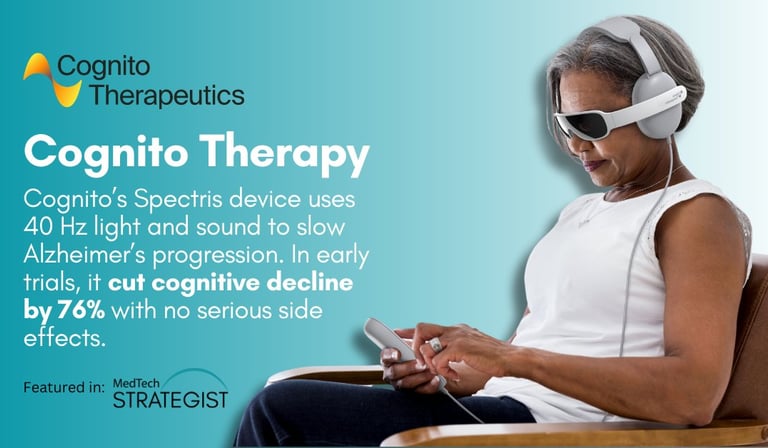
Non-invasive external MedTech devices (usually dTMS and tDCS) have flourished in recent years – solutions such as BrainsWay, Neuronetics, Soterix or Neuroelectrics are just some already-in-use examples – but they are not completely risk free, none of them are disease-modifying and they tend to work in early stage Alzheimer or in mild cognitive impairment only. New at home non-invasive devices such as Spectris AD – a sensory neuromodulation headset that delivers synchronised light and sound to evoke gamma brain oscillations, developed by Cognitio Therapeutics – are in development, but it is to be seen to what extent this solution can prevent Alzheimer or significantly slow down the onset.
Over the last 5 – 8 years the focus of healthcare systems in many developed countries has been on disease prevention as national health budgets came under strain. With the difficulties that treatments for dementia and other neurological diseases are encountering, the focus is also shifting on prevention in this space. Several international organisations have stepped up brain-health and dementia prevention work in recent years, notably the WHO, OECD, Alzheimer’s Disease International, the World Dementia Council, the Global Brain Health Institute and others. And out of the c. 12,000 commercial Neurotech businesses worldwide, c. 50% - 60% sit in the consumer-wellness and other segment, 30% are estimated to be focussed on treatment solutions and about 15 – 20% on biomarkers/diagnostics for early detection and prevention.


The pressure is on to prevent – some ethical challenges with biomarkers, early diagnostics and “prevention society”
Preventing dementia is very much linked to the ideas of longevity, healthy aging and youth preservation. Maintaining a sharp mind has never been more appealing and even expected by society, especially since we have been increasingly talking about life-long learning, enhancement and new models of individual worth and moral obligations.
The reasons seem clear:
The population is aging fast, especially in developed countries
Health budgets are therefore under strain – and so are insurance companies and pension funds
Retirement age is increasing and - coupled with fast technological advancements and shifts on the labour market – so is the pressure for lifelong learning and a long active life, which in order to maintain may require enhancement
Recent economic, environmental and geopolitical volatility (inflationary spikes, climate change, the pandemic and the possibility of future ones, increasing geopolitical tensions and wars) are adding further pressure on national budgets.
Some recent evidence (the Lancet Report 2024) shows that dementia can be delayed or prevented in at least 45% of cases by intervening on a specific set of factors.There is therefore an increasing “duty to be well” for the rational citizen, to put it in the words of Monica Greco, a social scientist, who argues that individuals feel an increasing moral obligation to stay well and healthy, as opposed to the simple right to health from the past. We are in a neoliberal model of health that individualises health responsibility and accountability and takes away the pressure from the overall society and institutions. But giving citizens an increasing number of technological props (in the form of multiple health apps and devices that sometimes can lead to choice paralysis and technological burnout) may not actually fix the problem, if the social dimension is decoupled from the equation.
The latest Lancet Commission update from 2024 identified a set of 14 modifiable risk factors for dementia:
lack of education (in early life)
hypertension (midlife)
hearing impairment (midlife)
traumatic brain injury (midlife)
excessive alcohol consumption
obesity (midlife)
smoking (midlife)
depression (late life)
physical inactivity (midlife/late life)
diabetes (midlife)
low social contact / social isolation (late life)
air pollution (across life course)
failing eyesight / vision impairment (newly added, 2024)
high LDL cholesterol (newly added, 2024)
However it is debatable which ones have the highest influence and to what extent an individual can control these risk factors on their own. Whilst it is accepted that choices such as smoking or alcohol consumption are highly modifiable, many other factors such as access to eduction in early life or avoidance of air pollution are not that much in individuals’ control. Genetic predisposition matters - though research shows it is not immutable - deleterious genotypes may be activated by environmental factors such as pollution or inadequate nutrition. Scarcity or unaffordability of healthy food options doesn’t happen just in low income regions in Africa but also in low income areas in developed countries like the UK. Pollution is an even bigger problem – changing housing and location in order to escape pollution is not an option for many people on low incomes.
In terms of pollution, one serious issue that has been highlighted more and more in recent years is that of microplastic pollution – microplastics are found in air particles in polluted areas as well as in many common objects, in food and drinking water and increasingly in clothing based on fine plastic fibres that can be easily inhaled. New research from the University of Technology Sydney shows that microplastics accelerate Alzheimer and Parkison’s damage to the brain – they trigger inflammation, disrupt the blood–brain barrier, generate oxidative stress, impair mitochondria and damage neurons. Many plastics are cleared from the human body but some small percentage remains and accumulates in organs, such as the kidneys, liver or the brain. Other studies earlier this year showed that individuals with dementia exhibited even greater plastic concentrations, particularly within cerebrovascular walls and immune cells.


Some sources:
https://www.weforum.org/stories/2025/06/recent-breakthroughs-fight-against-alzheimers-disease/
https://www.universityofcalifornia.edu/news/next-big-breakthroughs-alzheimers-science-and-treatment
https://www.alzint.org/about/dementia-facts-figures/dementia-statistics/
https://www.nature.com/articles/s41582-024-01051-w
https://www.alzheimers.org.uk/what-we-do/researchers/news/researching-new-drugs-alzheimers-disease
https://www.drugs.com/sfx/donanemab-side-effects.html
https://www.neurotech.com/charts
Andreoletti M., Blasimme A. et al. (2023) Optimising the Aging Brain: The BEAD Study on the Ethics of Dementia Prevention. The Journal of Frailty and Aging, 12(2). https://doi.org/10.14283/jfa.2023.6 https://www.sciencedirect.com/science/article/pii/S2260134124000781
Blasimme A., Leibing A. et al. (2025) Social, ethical, and epistemological aspects of dementia prevention: the three-country BEAD study. Geriatrics, Gerontology and Aging, 19. DOI: 10.53886/gga.e0000339_EN
https://www.thelancet.com/commissions-do/dementia-prevention-intervention-and-care
Greco M. (1993) Psychosomatic subjects and the ‘duty to be well’: personal agency within medical rationality. Economy and Society, 22(3). https://doi.org/10.1080/03085149300000024
https://neurosciencenews.com/microplastics-alzhaimers-parkinsons-30019/
Some new diagnostic tools, such as the AI tool StateViewer, developed by Mayo Clinic, can identify 9 types of dementia with an apparent accuracy rate of 88%. The tool analyzes a type of brain scan called a fluorodeoxyglucose positron emission tomography (FDG-PET), which shows how different parts of the brain use sugar (glucose), for energy. Areas of the brain that are impacted by dementia tend to use less sugar. The FDG-PET scan highlights the areas where the brain uses less sugar, which can point to the type of dementia causing the symptoms. Mayo Clinic has also developed another tool which can predict Alzheimer disease 10 years in advance by analysing PET brain scans together with APOE genotype and advanced biomarker blood tests such as p-Tau217, GFAP, NfL for predicting future risk in asymptomatic individuals.
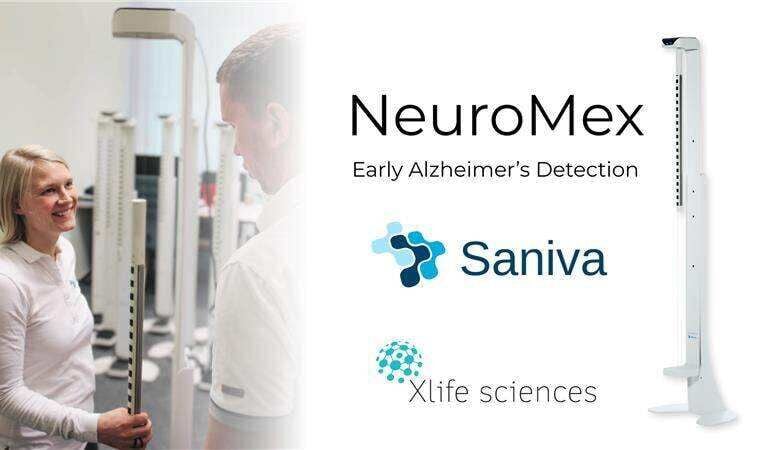
Mayo Clinic is not unique in these efforts, other firms have developed devices or techniques for the early diagnosis of diseases such as dementia. Saniva Diagnostics (a portfolio company of Xlife Sciences) is such as example - in February 2023 they have received the 513(g) approval from the FDA for their proprietary screening device NeuroMex and at the end of this year Saniva successfully completed pivotal clinical trials, NeuroMex becoming the first certified and clinically validated device to detect early-stage Alzheimer’s through motor responsiveness.
Biomarkers are quantifiable indications of a certain biological state or disease that can be used to assess a population's health, the severity of a disease, or the efficacy of a drug treatment. There are many ethical dilemmas linked to the collection and use of blood, genetic and other types of biomarkers.
There are concerns around the storage, sharing and use of sensitive health data, difficulties around proper informed consent, comprehension and voluntariness and privacy and confidentiality concerns linked to future data applications not initially anticipated and future access by various actors including insurance companies, employers, governments and others. Conflicts of interest may arise, as well as issues of transparency and disclosure.
The predictive and diagnostic use of biomarkers does carry ethical concerns, not just around privacy, but also around justice, prejudice, fairness and psychological wellbeing. For example individuals with an early diagnose of high risk of dementia could be identified and face discrimination by insurers, employers or other institutions or by individuals in certain cultures and social groups. Sometimes lack of accuracy of certain biomarkers or AI diagnostic tools can exacerbate these issues as some individuals may, incorrectly, receive a dementia diagnostic or a warning of high risk of future dementia.
Oftentimes it is even debatable if people in marginalised communities benefit or suffer from early diagnosis – since they may not have the power or financial means to act on some risk factors such as excessive air, water or food pollution/contamination in their area or lack of education infrastructure.
In conclusion, engaging the business community, governmental institutions and the overall community in ethical debate on these issues remains key. Key remains also the role of governments in acting on some of the modifiable risk factors of dementia, where some individuals by themselves lack agency. Shifting some of the responsibility burden from the individual towards the collective and towards decision makers in the commercial and policy making sphere will lead to better outcomes in the future.
IGEA Healthcare
Strategic Advisory for Life Sciences
Switzerland, UK, Italy
contact@igeahealthcare.com
© 2025 - 2026. All rights reserved.